

William J. Kraemer Outstanding Sport Scientist
Named for famed researcher William J. Kraemer, PhD, CSCS, *D, FNSCA, the Outstanding Sport Scientist Award honors the exemplary contributions and breakthroughs in the field of applied science and sport science. Dr. Kraemer retired in 2022 as full professor and head of The Ohio State University Neuroscience/Neuromuscular Laboratory for the study of human performance. He is an NSCA Fellow and is honored as Editor-in-Chief Emeritus of the Journal of Strength and Conditioning Research.
William J. Kraemer Outstanding Sport Scientist Award Eligibility
Each nominee will be asked to complete a criteria sheet and submit a CV, personal statement, and letters of recommendation outlining their career accomplishments and contributions to sport science.
The criteria sheet assigns points to a variety of professional achievements, letters of recommendation, volunteer involvement with the NSCA, and other activities related to sport science and will be used in the event of a tie.
NSCA Members in good standing may nominate other NSCA Members or themselves.
Nominations are open August-December
MINIMUM REQUIREMENTS
| Must be current member of the NSCA |
| Must have a minimum of two years consecutive membership* and 10 years total membership |
| Nominee is an active member and contributor of NSCA |
| Working as sports scientist researcher |
| A minimum of 10 years have passed since nominee has received doctoral degree |
| Has not previously won this award |
Additional requirements listed in the General Awards Criteria, include but not limited to, the nominee must be nominated by a member in good standing and nominees will be sent a criteria sheet to fill out that must be returned before the required deadline.
*Consecutive membership is counted back from the date the award is to be conferred.
How Awardees are Selected for the William J. Kraemer Outstanding Sport Scientist Award
Gathering Nominations
Nominations are gathered August-December each year. Any nomination received before the established deadline will be accepted for review of eligibility. Nominees will be notified of their nomination and asked to submit the required award materials, including the applicable criteria sheet, CV, personal statement, and letters of recommendation.
Eligibility Verification and Selection of Finalists
NSCA Headquarters will verify eligibility and confirm that minimum award requirements have been met. Headquarters will review and organize the Award Criteria Sheets, CVs, Personal Statements, and Letters of Recommendation for qualified nominees.
The Awards Subcommittee of the NSCA Research Committee will review all submitted materials and evaluate nominees using the Award Criteria Sheet, Personal Statement Criteria Scoresheet, and Letters of Recommendation. Following this review, the Awards Subcommittee will determine the top three nominees for the award. In the event of a tie, points accumulated on the Award Criteria Sheet will be used to finalize the top three nominees. The Awards Subcommittee will also verify that finalist candidates meet all award criteria through two independent reviews of each candidate.
Voting by Industry Leadership
- The Chair of the Subcommittee will then provide the Personal Statements and CVs of each candidate to the entire RC, past award winners, and the individual that the award is named after for a vote of the top awardee (for each award). If a current member of the RC is nominated for an award, they will be recused from the voting process and all correspondence of that particular award but are still eligible for nomination and award. If a current member of the RC is also a past winner, they shall vote only as an RC member.
- Voting will occur in a weighted manner with 40% contributed by past winners of the award and the individual that the award is named after and 60% weight given by RC members. As such, the total weight of the past winners and the individual that the award is named after (40%) will be divided by the number of past winners who agree to participate in the voting, and the resulting percent will contribute the weight of each past winner’s vote. Similarly, the total weight of the RC members (60%) will be divided by the number of Committee members (9), and the resulting percent (approximately 6.66%) will contribute the weight of each Committee member to the voting. The sum of the vote percentages from past winners, the individual that the award is named after, and Committee members will determine the award winner.
- The chair of the Awards subcommittee will keep record of the entire voting process and will then forward the selected winners for each award to the BOD. If there is a tie, two names for the award will be forwarded to the BOD recommended for dual recipients at the sub-committee’s discretion.
Awardee Notification
- The Subcommittee Chair will notify the Board of Directors of the selected recipient(s).
- The NSCA Headquarters will notify the recipient of the award, send regret notifications, create a Press Release announcement of the winner, and verify attendance at the National Conference awards banquet.
If there are no qualifying nominees, the award will not be given.
Award Timeline
August - Nominations open.
December – Nominations close and nominees are contacted to submit award requirements.
February – Nominees are required to have all materials submitted and NSCA staff will evaluate that eligibility requirements have been met before submitting to the Committee, SIG, or Task Force.
April – Committee, SIG, or Task Force should vote and decide the winner and will submit the winners name to the National Office.
April – Notifications to nominees will be sent by the National Office and press announcements will be coordinated.
July – Award conferred at the National Conference Awards Banquet.
William J. Kraemer Outstanding Sport Scientist Recipients
Congratulations 2026 William J. Kraemer Outstanding Sport Scientist Award Winner
Brad Schoenfeld, PhD, CSPS,*D, CSCS,*D, NSCA-CPT,*D, FNSCA
Dr. Brad Schoenfeld is a Professor of Exercise Science at Lehman College in the Bronx, New York, where he serves as Director of the Graduate Program in Human Performance and Fitness. He earned his PhD in Health Promotion and Wellness from Rocky Mountain University of Health Professions, with dissertation research focused on mechanisms of muscle hypertrophy and their application to resistance training. Dr. Schoenfeld has authored more than 400 peer-reviewed publications, with his work cited in approximately 40,000 scholarly articles. He has also written several books on fitness, including Science and Development of Muscle Hypertrophy, and has presented seminars and workshops in more than 30 countries across five continents.
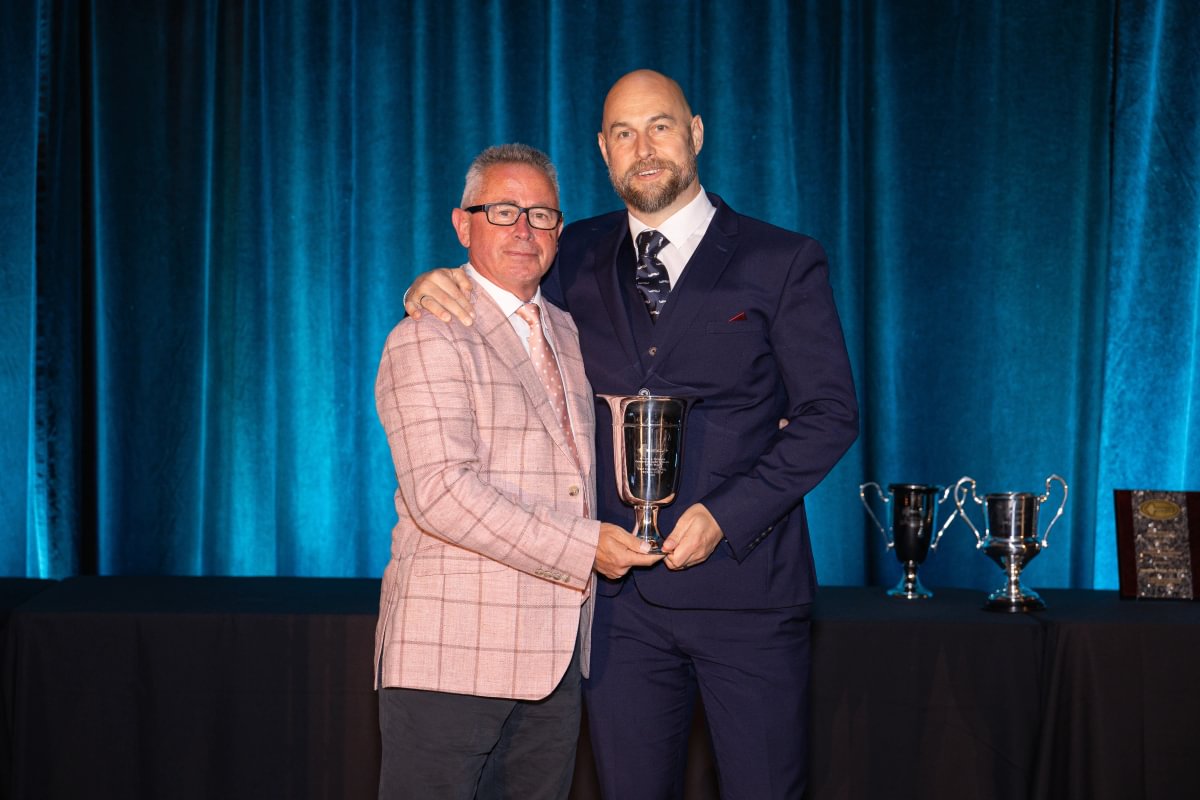
2025 Winner
Paul Comfort, PhD, CSCS,*D, FNSCA
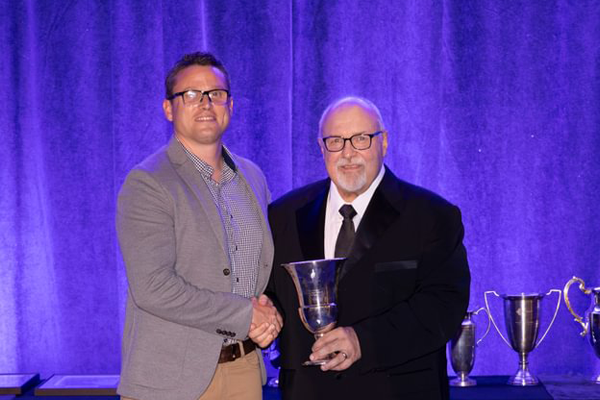
2024 Winner
Rhodri S. Lloyd, PhD, CSCS,*D, FNSCA
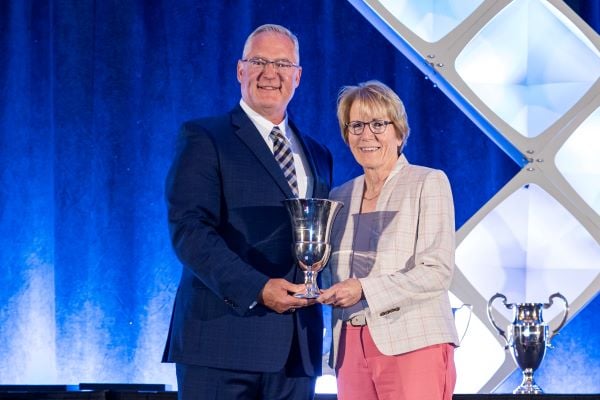
2023 Winner
Margaret Jones, PhD, CSCS,*D, FNSCA
2022 - Abbie Smith-Ryan, PhD, CSCS,*D, FNSCA
2021 - Greg Myer, PhD, CSCS,*D
2020 - Michael J. Ormsbee, PhD, CSCS,*D
2019 - Jared W. Coburn, PhD, CSCS,*D, FNSCA
2017 - Shawn M. Arent, PhD, CSCS,*D, FISSN, FACSM
2016 - Michael R. McGuigan, PhD, CSCS
2015 - Joel T. Cramer, PhD, CSCS,*D, NSCA-CPT,*D, FNSCA
2014 - David Behm, PhD
2013 - Jeffrey Stout, PhD, FNSCA, FACSM
2012 - Jeffrey M. McBride, PhD, CSCS, FNSCA
2011 - G. Gregory Haff, PhD, CSCS,*D, FNSCA
2010 - N. Travis Triplett, PhD, CSCS,*D, FNSCA
2009 - Lee E. Brown, EdD, CSCS,*D, FNSCA
2008 - Joan M. Eckerson, PhD, CSCS
2007 - Jay R. Hoffman, PhD, CSCS,*D, FNSCA
2006 - Joseph P. Weir, PhD
2005 - Andrew C. Fry, PhD, CSCS
2004 - Robert U. Newton, PhD, CSCS
2003 - Lawrence Weiss, EdD, CSCS,*D
2002 - Michael Bemben, PhD
2001 - Jerry Mayhew, PhD
2000 - Stephen E. Alway, PhD
1999 - Carl M. Maresh, PhD
1998 - Terry Housh, PhD, FNSCA
1997 - Robert S. Staron, PhD
1996 - Gary Dudley, PhD, CSCS
1995 - Everett Harman, PhD, CSCS, NSCA-CPT
1994 - Gary Hunter, PhD
1993 - John Garhammer, PhD, CSCS, NSCA-CPT
1992 - William Kraemer, PhD, CSCS
1991 - Steve Fleck, PhD and Mike Stone, PhD

- Privacy Policy
- Your Privacy Choices

- Terms of Use
- Retraction and Correction Policy
- © 2026 National Strength and Conditioning Association