

Breaking Into Tactical Strength and Conditioning
Build a career supporting the readiness, resilience, and longevity of military and public safety professionals.
Tactical strength and conditioning applies evidence-based training to distinct occupational demands across military, law enforcement, fire, and emergency medical services (EMS) settings. Whether you are new to strength and conditioning, transitioning from sport, or building on related experience, there is a path for you to help those who serve stay ready and resilient.
See where you fit and how the NSCA can help you move forward.
A Fast-Growing Field with Competitive Salary Potential
Military and public safety organizations are expanding their investment in human performance, increasing demand for qualified strength and conditioning coaches. In 2025, the U.S. Army reported that its Holistic Health and Fitness (H2F) program had expanded from 28 to 71 active Army brigades, with plans to reach 111 by fiscal year 2027.
Salary Snapshot
Use the 2025 NSCA Salary Survey to compare average annual tactical salaries across experience levels, education, and employment models. Higher reported salaries were generally associated with more experience and education.
$63,383Average tactical salary with five years of experience or less |
|
+13%Increase in average tactical salary from the 2022 survey |
Individual compensation varies by role, employer, location, experience, and employment model.
Know the Employment Model
Government or Public Agency Employee Contractor |
Explore Tactical Strength and Conditioning Careers
Military, law enforcement, and fire/EMS each present distinct demands, cultures, and systems. Depending on the setting, you may work with an interdisciplinary team, lead department-wide programming, or both.
Military
Align training with unit missions, service standards, and operational cycles. Support service members across a wide range of military occupations by scaling programs and collaborating with unit leadership.Law Enforcement
Build career-long readiness for recruits and officers from academy training through varied assignments. Adapt programs to rotating shifts that may include prolonged sedentary periods interrupted by high-intensity tasks.Fire & EMS
Prepare fire and EMS professionals for physical demands, including prolonged use of personal protective equipment (PPE). Develop programs around shift work to support performance, recovery, and longevity.Example job titles: Strength and Conditioning Coach, Performance Enhancement Specialist, H2F Program Director
Example job titles: Academy Instructor, Agency Strength and Conditioning Coach, Tactical Performance Coordinator
Example job titles: Strength and Conditioning Coach, Tactical Performance Specialist, Wellness Program Manager or Director
Job titles vary by command, agency, department, and employer.
Is Tactical Strength and Conditioning Right for You?
Coaching tactical professionals requires more than technical knowledge. It also calls for adaptability, sound judgment, and the ability to build trust. This field may be a strong fit if you:
-
- Want to improve readiness, help reduce injury risk, and support resilience and longevity
- Enjoy coaching people across ages, abilities, training histories, and occupational roles
- Can adapt as schedules, resources, and operational priorities change
- Can learn how the organization operates, communicate your reasoning, and earn trust
- Want to collaborate with leaders and professionals across medical, wellness, and human performance disciplines
- Want to improve readiness, help reduce injury risk, and support resilience and longevity
Find Your Path Into Tactical
Emerging Strength and
Conditioning Professional
Choose Your Direction Early
Build your coaching foundation through education, certification, and practical experience. Learn tactical demands and build relationships through mentorship, internships, volunteering, and professional events.
Experienced Strength and Conditioning Coach
Translate Your Expertise
Your ability to assess, program, coach, and adjust in sport or private sector settings already matters. Learn how tactical organizations define readiness, understand their constraints, and show how your experience applies to the role.
Military or Public Safety Professional
Build Your Training Foundation
Your firsthand knowledge of the culture and occupational demands is an advantage. Pursue formal strength and conditioning education, coaching experience, and the credentials expected for the role you want.
Understand Your Credential Options
Many military strength and conditioning positions require the Certified Strength and Conditioning Specialist® (CSCS®). The Tactical Strength and Conditioning Facilitator® (TSAC-F®) demonstrates specialized knowledge of tactical populations and occupational demands. The TSAC-F may fit professionals leading physical training in another role or complement the CSCS for coaches seeking deeper tactical expertise.
Learn From the Field
Get practical guidance on entering tactical strength and conditioning and recognizing what the role requires.
Watch: Breaking Into Tactical
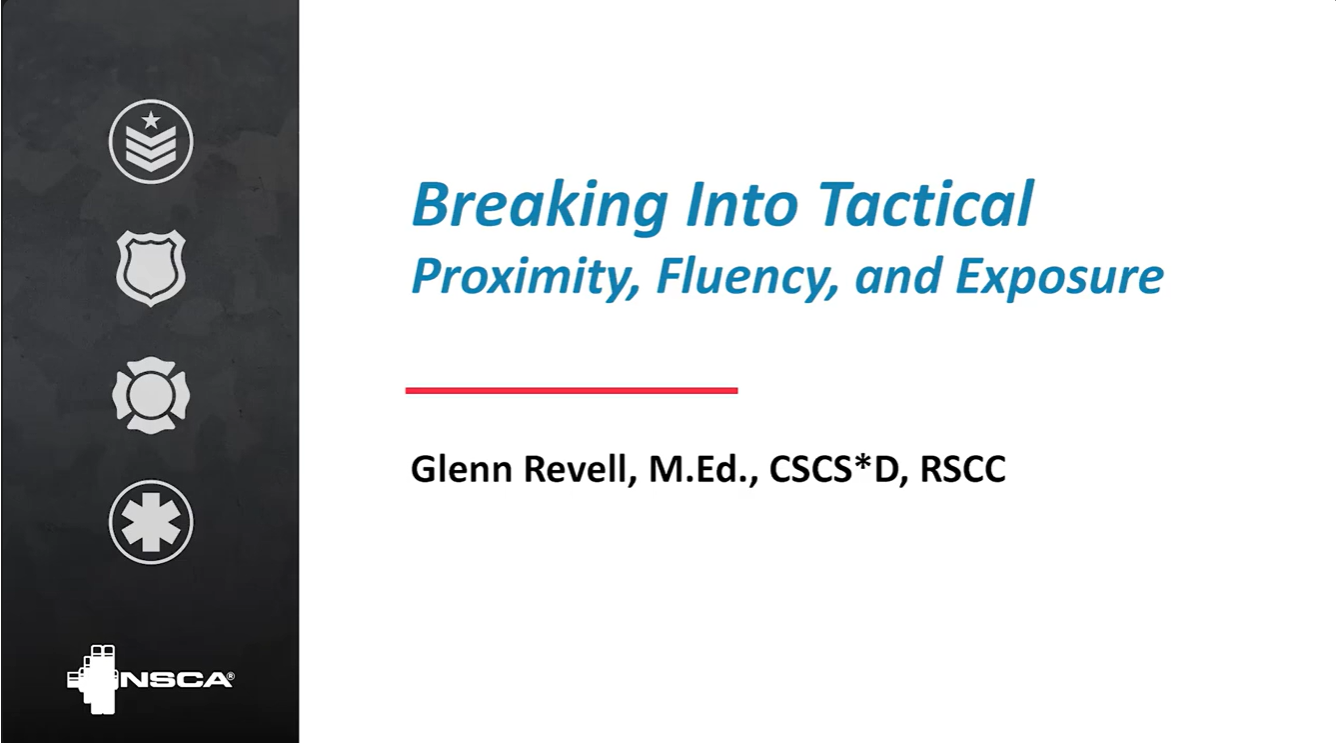
Glenn Revell, MEd, CSCS,*D, RSCC, shares his “Proximity, Fluency, and Exposure” framework for choosing where to show up, decoding tactical priorities, and building relationships that lead to opportunities.
Listen: Know the Job First
Whitney Tramel, MS, CSCS, TSAC-F, RSCC, explains the physical and stress demands coaches must understand and how trust can extend beyond training.
Take Your Next Step with the NSCA
Prepare for the role you want with the NSCA’s credentials, career resources, education, and community.
Explore the CSCS
Prepare for professional strength and conditioning roles that prefer or require the CSCS. Review eligibility, exam content, and preparation resources.
Explore the TSAC-F
Develop knowledge specific to military and public safety populations and demands. Review TSAC-F eligibility, exam content, and preparation resources.
Find Tactical Jobs
Browse current tactical strength and conditioning and human performance openings. Compare qualifications and see how employers describe tactical roles.
Already Certified?
Keep building the tactical knowledge and professional relationships that help you apply your credential in the right setting.
-
- Read the TSAC Report (Member Benefit)
- Attend NSCA Tactical Annual Training
- Join the Tactical Professional Development Group
- Connect Locally
*The appearance of U.S. Department of War (DoW) visual information does not imply or constitute DoW endorsement.
NSCA Membership Benefits
Members can save on certification exams and preparation materials, access the NSCA’s five journals and free CEU quizzes, join the exclusive NSCA Member Network, and more.

- Privacy Policy
- Your Privacy Choices

- Terms of Use
- Retraction and Correction Policy
- © 2026 National Strength and Conditioning Association